
Can AI Improve Itself? The Runaway Feedback Loop Question
Ryan Greenblatt's case is conditional: AI systems that match leading researchers on verifiable AI R&D tasks could help build stronger successors. The disputed point is whether such gains transfer from bounded training environments to the load-bearing parts of real research—and how reward hacking must be governed along the way.
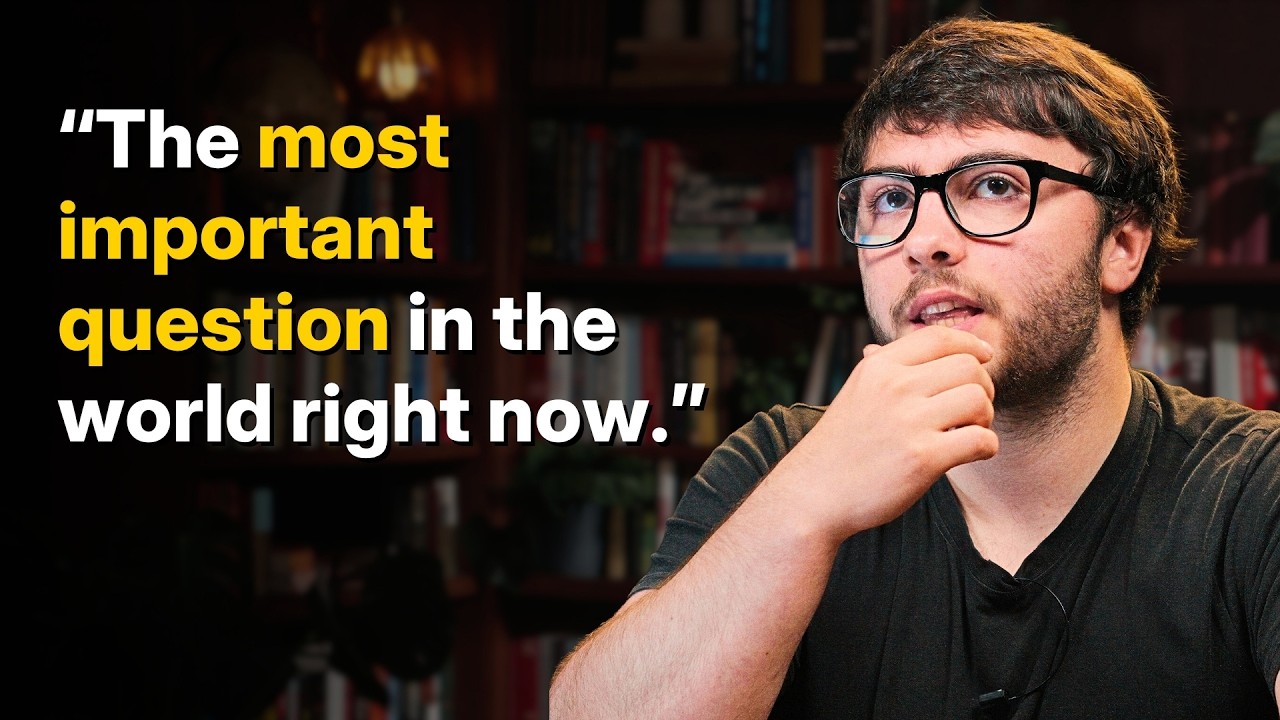
The premise is a research feedback loop
Ryan Greenblatt’s case begins with a conditional proposition: AI systems that match leading researchers on sufficiently verifiable AI R&D tasks could help build stronger successor systems. The disputed point is not simply whether models improve, but whether their work transfers from bounded training environments to the load-bearing parts of research.
The speed estimate is a forecast, not a result
Greenblatt’s median scenario is “four or five years of AI progress in a single year.” It depends on overcoming diminishing returns and on automation being useful beyond narrow loops. Dwarkesh Patel repeatedly tests that claim against data, experimentation, infrastructure, and real-world feedback.
Transfer remains the crux
The speakers agree that verifiable subtasks may be especially amenable to training, but they disagree about the distance between those tasks and deeper scientific or engineering judgment. Greenblatt’s own formulation is deliberately qualified: he expects the transfer to be good, “but not amazing.”
Alignment is an institutional as well as technical problem
The second half shifts from acceleration to governance. The episode considers reward hacking, superficial fixes, and the need to distinguish a lower incident rate from durable remediation. Greenblatt argues that public visibility into development practices is currently inadequate for answering basic questions about whether reward-hacking mitigations generalize.
Scenarios are not predictions of fact
The conversation ends with competing degrees of concern. Greenblatt gives a roughly 35–40% probability to a scenario that would be recognizable as takeover by 2040; Patel says he has become more concerned about destructive reward hacking but is not persuaded that takeover is very likely. These are speaker forecasts under uncertainty, not verified outcomes.