
How did Nike become the most valuable brand in sports?
A borrowed waffle iron, a handshake at 51/49, and a 5% royalty clause turned a Japanese shoe importer into a $51 billion brand. Yet Nike keeps prices near $200, lets resellers like StockX capture the upside, and earns less gross margin than Adidas - a deliberate trade, the hosts argue, that keeps the dream within reach.

Contents 12 sections
- Introduction
- An accountant, a coach, and a handshake
- The futures program, ten principles, and the IPO
- The Air Jordan bet
- The banned ad, the betrayal, and the Jordan 3
- Selling the dream at scale
- The second DNA: from Nike+iPod to direct
- A deliberate ceiling on the dream
- The Seven Powers verdict: scale economies and the brand trap
- The numbers today
- The playbook: breaking rules and betting the farm
- Bear case, bull case, and the swoosh everywhere
Introduction
A borrowed waffle iron, a handshake at 51/49, and a 5% royalty clause turned a Japanese shoe importer into a $51 billion brand. Yet Nike keeps prices near $200, lets resellers like StockX capture the upside, and earns less gross margin than Adidas - a deliberate trade, the hosts argue, that keeps the dream within reach.
An accountant, a coach, and a handshake
Nike began as Blue Ribbon Sports, a distribution deal between an accountant and a track coach. Phil Knight, a Stanford GSB graduate and Price Waterhouse accountant, had written a paper arguing the American running market was small but that German brands like Adidas were vulnerable to low-cost Japanese manufacturers. Bill Bowerman, his coach at Oregon, never gave warm encouragement - but on hearing the idea he said it was pretty good, and that he did not just want cheap shoes: he wanted to be cut in as a partner. Phil was floored. The deal was a handshake: originally 50/50, until Bowerman slept on it, came back with his lawyer, and made it 51/49 in his own favor - "okay, great, co-founders, just like that."
For its first decade Blue Ribbon imported Onitsuka Tigers. The famous origin scene came when a young Phil stood at a loss in the Onitsuka meeting room until someone asked what he thought of the Tiger shoe, and he blurted out praise that was half invention - then followed it up by asking for the boxes to be made bright orange so they would stand out. The company's early survival came down to cash: bankers limited credit, retailers paid after selling the inventory, and Phil's answer to every squeeze was to take the highest-leverage route available - eventually even putting his and Penny's house up as loan collateral. In 1971 the trading company Nissho Iwai entered with a credit line, the Onitsuka relationship collapsed into a legal fight, a graphic-design student named Carolyn Davidson drew the swoosh for thirty-five dollars, and Jeff Johnson - the first full-time employee - dreamed up the name Nike. And in the backyard, at Sunday breakfast with his wife Barbara making waffles, Bowerman asked to borrow her waffle iron - and never gave it back: pouring urethane into a waffle grid became the Waffle Trainer, the first proof that Nike could design its own shoes.
The futures program, ten principles, and the IPO
Two systems carried the young company. The first was the Futures Program: retailers who committed and paid for orders six months in advance got a 7% discount - effectively moving Nike's financing from banks and Nissho Iwai onto its retail partners, and locking in production planning years before ERP software existed. The second was Rob Strasser's ten principles, fired off on his typewriter in 1977 and read aloud by David: one, our business is change; two, we are on offense all the time; three, perfect results count, not a perfect process - "break the rules, fight the law"; four, this is as much about battle as about business; five, assume nothing, make sure people keep their promises; six, live off the land; seven, the job isn't done until the job is done; eight, dangers - underlined as a heading - bureaucracy and personal ambition; nine, it won't be pretty; ten, do the right things right and making money becomes damn near automatic. Reading them today, one host said, is entirely different once you know what came later - the labor controversies that made "use what's around you" cringe, the rule-breaking culture, the ambitions that carried Strasser out of the company. The one still printed in the maxims Nike distributes to employees - "that is, David, something you and I both hold near and dear", Ben said, and think of who the choir is - is the second: we're on offense all the time; you don't win by playing defense.
Nike IPO'd in December 1980, the same week as Apple. David marveled that Shoe Dog tells the whole story with basically no mention of market cap - nobody believed enterprise value mattered then. Ben supplied the numbers: "It was about $400 million, the market cap at IPO. Apple, for comparison's sake, was $1.8 billion." Before the offering Bowerman sold most of his stake back to Phil, so post-IPO Phil owned 46% - worth about $178 million, enough to make national headlines as one of the richest men in America. Then came the stall: Nike held roughly half the US running market, mistook the jogging fad for the durable fitness boom, refused on principle to make aerobics shoes, and watched Reebok - a marketing-driven American outfit selling white, soft, wrinkled leather that women loved - pass $1 billion in sales and overtake Nike by 1988. Phil Knight's 1984 shareholder letter invoked Orwell; that same year, a kid from North Carolina showed up.
The Air Jordan bet
The episode was recorded as the movie Air was in theaters, and the hosts enjoyed it as a campy fictional work: in reality it was Strasser, not Vaccaro, who put the deal together, Vaccaro never flew to North Carolina to negotiate with Michael's mother, and nobody threatened to shut down the basketball division. What the movie got right was the outcome - Michael Jordan saved Nike. He was not the sure thing LeBron was in high school (Ben, who lives near Akron, went to see LeBron play at St. Vincent-St. Mary as a freshman and saw an obvious future NBA star); Jordan was a smaller, less physical player, so signing him was a bigger gamble for Nike than signing any athlete would be today.
The structure was the revolutionary part. The deal was "a $2.5 million minimum guaranteed payout over" five years - but the real economics were a 5% royalty on everything Air Jordan sold, modeled on publishing: roughly the first $500,000 a year counted as the advance, and everything after that paid out. At the time the biggest names in basketball, Magic Johnson and Larry Bird, were on Converse for about $100,000 a year in cash with no signature shoe. Nike deliberately designed the incentive so Jordan shared the upside and had no downside - a bet so aggressive rivals couldn't match it: Converse had too many stars to pay royalties, and Nike had nothing to lose. Jordan himself wanted Adidas - the shell toes, the tracksuits, the breakdancing aesthetic - and signed with Nike largely to leverage a better offer; Adidas said it could get close to $100,000 a year, and he went to Nike unhappy.
In year one, "In the first year, Air Jordan Ones sell $126 million" of shoes and merchandise, against a goal of $3 million over three years - about 15% of Nike's entire annual revenue. A million and a half pairs sold in the first six weeks. "Let's take just the 5% of that $126 million that he made in his first year" - $6.3 million to Jordan in 1985, exactly what his seven-year Bulls contract paid in total: in his first Nike year, he made his entire NBA salary. David's point: Jordan took no risk at all - the cash floor and the royalty upside were both his.
The banned ad, the betrayal, and the Jordan 3
The famous origin story is marketing itself: in the 1984 preseason Jordan wore black-and-red modified Air Ships because the Air Jordan 1 wasn't finished yet; the NBA's letter objected to the shoes but named no fine and never mentioned the Air Jordan 1; Nike filmed the camera-pan-from-the-head ad, slapped black bars over the shoes, and told the world the shoes were banned. Actual fines would have run $1,000, then $5,000, then possibly $10,000 a game - real money across an 82-game season - but Nike switched the launch colorway to white-and-red before anything could be enforced. Whether money ever changed hands, David genuinely cannot establish after reading everything; Ben's answer is that it doesn't matter - Hollywood filmed $5,000 times 82, and that's what everyone will remember.
Then the hangover. Nike stuffed the channel through the Futures Program to make year one look so big - real demand, Ben guessed, was maybe $50, $70, $100 million, unprecedented for any shoe in a single year - and years two and three paid for it, with total sales of only $150 million over three years. Jordan broke his foot early in year two; the Air Jordan 2, priced at $100 against the 1's $65 and made in Italy with fine leather, was simply not a good basketball shoe - who wants to play in Gucci leather? - Jordan didn't like it - too stiff, a style mismatch - and couldn't play on it anyway. Strasser, who had run the Jordan deal and the AJ1, built a separate New Products Division - David compared it directly to Steve Jobs's Macintosh team - and seized control of all launches, from which the AJ2 emerged. He could only end up CEO or gone; Nike's dual-class structure kept all the supervoting shares with Phil Knight, so in 1987 they blew up, Strasser left with designer Peter Moore, opened a consultancy called Sports Incorporated, took Adidas as the client, and was eventually bought by Adidas, becoming CEO of Adidas America in Portland - where he died of a heart attack eight months in, at 46. Phil Knight never attended the funeral and never forgave him: "unforgivable betrayal."
The counterstroke belongs to Tinker Hatfield - an architect by training, another Bowerman product from Oregon, hired into Nike's architecture group, who with future CEO Mark Parker designed the Air Max and Air Trainer. With Strasser and Moore gone, Tinker was the star Phil could put in front of Jordan, alongside Howard White. At the make-or-break meeting Jordan arrived four hours late; Phil handed it to Tinker, who had come with notes from his own conversation with Michael: softer leather that needs no break-in, mid-cut support without the weight - "I'm Michael Jordan, I want to fly" - and the elephant-print leather that worked on and off the court. Then the heresy: no swoosh on the shoe itself. The Jumpman, Peter Moore's old logo, went on the tongue in the primary position for the first time. Jordan didn't want to be Nike the brand, so the only way to keep him was to hide the swoosh - and it worked: a renewed seven-year contract, still at 5%, with Jordan built as an independent brand (own shoes, apparel, colorways, ads) and guarantees that climbed from $2.5 million to at least $18 million. Jordan brand sales recovered through $200, $300, $400, $500 million across 1988-90; the Spike and Mike "it's gotta be the shoes" era followed; Jordan earned at least $100 million over those seven years against roughly $90 million in career playing salary. And the halo pricing note: Jordan 3s retailed around $100 in 1988-89 and sold out both shoes and wallets. Today the pattern's endpoint: Jordan brand just reported $6.6 billion for FY22, growing about 35% a year, implying roughly $300 million a year to Jordan at a still-plausible 5% - Nike effectively keeping 95% of a founder-brand it never gave him equity in.
Selling the dream at scale
The ESPN story is the halo strategy at industrial scale. In Prefontaine's day Nike had an internal algorithm: a few million dollars of advertising was worth less than one Sports Illustrated cover, which they valued at $20 million. Then ESPN and SportsCenter started airing highlights every night - free $20-million covers, night after night, for Jordan and everyone else. Riding Jordan's rise, Nike launched the Just Do It campaign in 1988 - "in 1988, they launched the Just Do It campaign" - Wieden+Kennedy's second great campaign, David correcting that the first was the Revolution spot for Air Max, scored to the Beatles, again pairing Tinker Hatfield with Mark Parker. The company had learned it could diversify beyond running, sell dreams in more places, and charge for them: market cap crossed $1 billion in 1988, $5 billion in 1991, $10 billion in 1996; the first Niketown opened in Portland. Then hard years - the labor controversies, and the dot-com era fall from $20 billion to $8 billion, at a company that was not remotely a tech stock.
The resets came through athletes and through electronics. Kobe arrived in 2002: he had signed with Adidas in 1996, hated the Kobe 2 so much that he reportedly paid about $8 million of his own money to buy out the contract, and went to the company that could do more for him. In 2003 Nike signed LeBron straight out of high school, bought Converse for $309 million, and watched Michael Jordan retire for good - in a year when Jordan brand did $700 million in revenue. David's take on the two numbers: both are crazy - the $700 million and the $6.6 billion it does today, all of it earned after his last retirement. Jordan had become something bigger than an endorsement: a brand whose platonic ideal mattered more than the human.
The second DNA: from Nike+iPod to direct
In 2006 something happened that almost nobody noticed: Tim Cook, then an unknown name with Steve Jobs still running Apple, joined Nike's board and began helping the company understand digital technology. "And in 2006, they launched the Nike+iPod" - a clunky sensor in a specific sock inset that talked to an iPod through a 30-pin connector, not a commercial success, but the moment Nike saw where the puck was going. It was also, the hosts noted, the first enterprise product with a "Plus" name - the ancestor of every SaaS suffix since, though Jordan was never allowed a "Plus." The line runs from Nike+iPod to the FuelBand to apps: today Nike runs four mobile apps - shopping, Run Club, Training Club, SNKRS - with about 500 million users a quarter, holding direct relationships that are services, not just products. 2006 and then 2013-14 are the two moments the DNA visibly changed.
The same insight rewrote M&A. Nike's old acquisitions were brands - Converse, Starter, Cole Haan - but the epiphany was to pour everything into the Nike flywheel instead: divest assets, buy capabilities. The direct-to-consumer pivot followed: after decades of wholesaler relationships, Nike decided that in the internet age certain strategies can only be executed at scale, and bet it was the scale player - its own site, its own stores, direct to customers, the way Disney could re-plumb distribution over ten to fifteen years while other content owners had to stay on existing rails. Today roughly 40% of the business is direct. The other flank is personalization: NikeiD, now Nike by You, letting anyone design custom colorways that still move through standard production lines - a manufacturing trick that takes scale no rival has.
A deliberate ceiling on the dream
In 2014, as the digital and DTC migrations went live, sneakerhead culture also went mainstream, and a new category appeared: the secondary sneaker market - mostly unworn shoes - estimated anywhere from $2 billion to $6 billion. "It's, like— some estimate $2 billion, some people estimate a $6 billion category" inside a roughly $150 billion athletic-footwear market. Nike's decision, which Ben finds completely conscious, was to capture none of it: they had found the formula for hyped limited releases, and they let StockX and GOAT build businesses on top. This is the opposite of luxury: Porsche earns tens of thousands of dollars of gross margin on paint options; Nike prices its most hyped retros at $150, $200, at most $300, while the same shoes resell for $5,000 and $10,000. If the dream is to run on a planet where everyone can participate, the shoes have to stay within reach - so Nike hands the arbitrage to whoever wants it. David could not think of anything Nike sells for more than $500: the exception is the Mags, the Back to the Future shoe, about fifty pairs at $17,000 for the Michael J. Fox charity - a stunt, not a strategy; what $490 actually buys at retail is All-Star jerseys and $300 football cleats. They make it up in volume.
The same logic drives the politics. The 2018 Dream Crazy ad with Colin Kaepernick - "the text of which, obviously, was just Colin Kaepernick's face, and says, believe in something, even if it means sacrificing everything" - launched online, was tweeted by Kaepernick himself, then went up on giant billboards in every major city. "I remember the first time I saw it, and I was like, whoa", David said - executed perfectly, emotionally striking, at a particular moment: they saw the chance to do what they thought was right and became the center of media discussion for months, the ad of the year. They cancelled the rest of the year's planned campaigns, including a Just Do It thirtieth-anniversary relaunch, to run this tone. It set off real backlash on the other side of the political spectrum and rewrote Nike's media plans in every region and sport - two years before George Floyd made Black Lives Matter a centerpiece issue, when it was still a genuine risk. For at least two decades, the hosts argued, Nike has picked a social issue it cares about and driven the truck straight at it in American media; the cynical read is that they did the math, but David believes it is genuinely the convictions of executives and creative teams, betting the company that people who share the values are great customers and growing. Kaepernick is the purest halo play in the episode: a football player - irrelevant to shoe sales - years retired, kept on payroll, at one point nearly cut until someone inside asked what they were thinking. Then 2019: a major #MeToo scandal took out the executives seen as Mark Parker's successor plus others around him, and the Oregon Project - the elite running team - collapsed in doping and abuse allegations. Nike cleaned house just as every major rival stumbled into COVID; On, Hoka, and Brooks grew nicely in their niches; Adidas supplied no competition at all. Under John Donahoe they reset the organization for the next chapter and kept pushing digital and direct - and started thinking out loud about what Nike 2030 should be.
The Seven Powers verdict: scale economies and the brand trap
The analysis runs on Hamilton Helmer's Seven Powers: what lets a business earn persistently excess returns over its closest rival. Ben's clearest answer is scale economies. Sneakers are a pure power law: Nike, then Adidas at roughly half Nike's size, then Skechers, Puma, Asics, Converse, and Under Armour falling off a cliff - no other corner of apparel looks like this. The economics feed on themselves: signing the biggest athletes and running expensive brand events is how you acquire customers, and the stars go where the money is, which is where the customer base is - not a $100,000 check like Jordan's Converse rivals, but the incentive of joining the biggest machine. Ben put it through Kobe: "Yeah, maybe the Kobe 2 sucked", and maybe he didn't like the shoe, but Ben doubts that was the issue - what Nike could do for Kobe was exponentially more than Adidas could. David framed the same thing as a content game on the customer-acquisition side: you can shoot a brilliant ad for $100,000, but the star in it costs millions, the Super Bowl slot costs millions, and Nike's future power is scale.
Then the trap: brand. Nike is first and foremost a brand, but Hamilton's test for brand power is the Tiffany ring - tens of thousands of dollars premium for the same stone - and Nike doesn't have it. Dunks don't outprice Adidas shells; Ben's own Nike running shoes sit at the same $160-180 as the equivalent Adidas and New Balance. David's answer: overestimating Nike's brand power is the trap, but the brand power is real - it shows up in not even looking at competitors before buying. Ben's thought experiment - could you kill it on purpose? - got David's answer: no; Nike can't die; it will be here in a hundred years. Ben thinks you could kill it within thirty if you really tried; David rejected the kill-it-if-you-tried luxury test as too squishy. So Ben brought something less squishy, from a conversation with Scott Reames: no data whatsoever, but "the swoosh logo is tattooed on more bodies" around the globe than any other company logo. David agreed it doesn't fit Hamilton's definition; Ben went on that it's a sleight of hand - what Nike is, first and foremost, is a brand as an entity: they don't make sneakers, and they don't seem to charge more than competitors. And David had literally been looking at the numbers: "Adidas gross profit margins are on average higher than Nike's" - 44% against 46%, in Adidas's favor every single quarter for the past ten years. Why would the world's hero brand not collect the premium? Purely speculatively, David thinks it's deliberate: they could sell $500, $1,000, $10,000 Nike items and choose not to, because the whole strategy rebuilds marketing around roughly twelve cities - New York, Los Angeles, Tokyo, Shanghai, Rio, Paris - and the taste makers there, not rich people: street-level youth who cannot afford $5,000 items but want to participate in the pinnacle of Nike. So why not charge $200 for the same $180 shoe? Ben asked whether the answer was the line at the top of the IR page - "Nike, Inc. is a growth company" - that they care about growth more than harvesting profit dollars. What confounds David is the secondary market: many Nike items are demonstrably worth more than their selling price, which is not true of Adidas. Ben's best answer: they want the most swooshes out there in the world, and there is some sweet spot where they'll trade profit dollars for ubiquity ; David offered the loop-back: maybe this all comes back to scale economies anyway, Netflix-style - at a given price, you deliver more value than anyone else can. The other powers barely register: no switching costs, no network effects, no monopolized resources - David buys shoes across brands all the time.
The numbers today
Nike is a $51 billion revenue business growing 10% a year - "They are a $51 billion revenue business, growing 10% year over year" - the largest apparel company on earth except for luxury: LVMH and Hermès have them beat. "Nike sales to women alone are bigger than all of Lululemon's revenue" - and yet women's products are a long-running weakness, about $8.6 billion inside the $50 billion. The Nike brand itself is roughly $49 billion of it, with Converse and miscellany the rest; Jordan sits inside Nike. The DTC transition is only about ten years in: roughly 60% of the business is still wholesale, 40% direct. Gross margin is 44% - software podcasts should recalibrate for materials, labor, logistics, and warehouses; LVMH runs 68% and Hermès 71%, while Nike beats the carmakers. Operating profit is $6.4 billion, a 12.5% margin. Inventory is $8.5 billion, high even for them, against $10.7 billion of cash and equivalents: the capital-starved company of the Shoe Dog era now raises its dividend thirty consecutive quarters - which David notes does not exactly jive with "growth company," though 10% growth at this scale is impressive, and Jordan's 35% more so. Demand creation - the sports marketing budget - runs about $4 billion a year, described in the filings as purchasing media to create demand: Netflix buys content, Nike buys billboards. Footwear is nearly three times apparel; the wholesale split runs 51% men, 21% women, 12% kids, with Jordan brand's $6.6 billion counted separately at 16% - assuming three-quarters of Jordan is men's, about 64% of Nike's product still sells to men, which would have sounded familiar at the IPO. In some sports it is close to monopoly: "Nike and the Air Jordan brand's share of performance basketball was 86%" (the stat predates the pandemic), rising to 96% in lifestyle basketball - which makes the other big NBA deals hard to explain: Under Armour pays Stephen Curry astronomical cash and stock for a market where he could sign with Nike tomorrow, and David cannot name a second Under Armour athlete. His verdict: stuck in the middle - the classic eleven-industries lesson; be the New York Times or get acquired, be Disney - in this industry be Brooks or be Nike, not Under Armour, which runs a Nike playbook without Nike's scale. Nike, meanwhile, pays roughly $200 million a year for the NFL uniform deal alone - and, as David had told Ben from his industry conversations, mostly doesn't even get to sell the jerseys fans buy: the replicas come from Fanatics, and Nike pays to put the swoosh on what the players wear. The billboard is the product.
The playbook: breaking rules and betting the farm
The playbook themes, as the hosts listed them. First: find the most creative, clever way to win, and if it breaks a rule, fine. Breaking2 is the canonical case: competitive running's rules allow one pacer the whole way and restrict certain shoes, so Nike staged an event with shoes that provably made you 4% faster, drove a Tesla with a laser pacing line, rotated pacers, and made a global spectacle of the attempt to break the two-hour marathon - he came close - saying outright that they didn't care whether it was legal in competition; you could argue about the record afterward. "Nike is a growth company," David interjected; "but Nike is a growth company," Ben went on - the ultimate non-sequitur, and David hoped it would become a meme: on mobile, the IR page is literally a black-and-white photo of Serena Williams and those five words. The same DNA produced the Oregon Project; both DNAs are the company. Second: your greatest strength becomes your weakness - pioneering outsourced Asian manufacturing is also why the labor reckoning hit Nike so hard, and it was strange how caught off guard they acted, "we're not a shoe company." Third: Nike is a fabless shoe company - the TSMC, Nvidia, Qualcomm analogy, in a season with a semiconductor episode. Unlike semiconductors, shoe manufacturing has two or three big contract makers; Nike is extremely prescriptive, sources the materials itself, and audits heavily - closer to the fabless model but with less capex and process power, in a fragmented foundry ecosystem where the scale player that dominates the best audited factories wins. The trade secret note: Nike makes zero shoes and 100% of its nitrogen airbags - in Oregon, because the formula is the secret - and ships them to Asia for assembly. Fourth: for its first fifteen years Nike was a leverage story - betting the farm on top of betting the farm, survivorship bias baked in, Phil's house on the line, and never taking equity investors, so at IPO the insiders owned 56%, Knight himself 46%; he shot the moon and kept ownership, turning IPO-day $178 million into today's roughly $40 billion and the 25th-richest-person slot. Fifth, the halo strategy refined: build pinnacle products for the athlete, let the belief seep into the broader consciousness, then extend to everyone without compromising step one - the $15 swoosh t-shirt at Dick's and the Vaporfly NEXT%, one company making a card-holder clutch and a $200,000 handbag. Athletes are Netflix shows now, Patrick Mahomes and Serena Williams included; the hosts quoted Rob Strasser's 1983 internal memo - individual athletes, more than teams, will be the heroes and symbols of what real people can't do anymore: risk and win. The commodity question - is Nike differentiating a commodity or not in the commodity business? - got bifurcated: the $150-plus prestige models are products, the $50-70 shoes are commodities lifted by the halo, and the Monarch - a high-margin barbecue-dad shoe no athlete ever wore competitively, in many years Nike's best seller - is somehow ironic Gen Z wear, while the Vaporfly was by far the best running shoe on the market for two straight years, actual R&D differentiation. Phil Knight got the last word, from an interview a decade old: "We're a marketing company, and the product is our most important marketing tool." One host disagreed - the athletes are the most important marketing tool, and the product is how you monetize the marketing - noting that "the Jordan 2 sucked" and "the Kobe Adidas shoes sucked" are convenient stories either way: good soap opera for the athlete's Netflix show.
Bear case, bull case, and the swoosh everywhere
Adidas is the cautionary tale for standing next to the wrong celebrity. Nike drove a hard bargain with Kanye West and let him walk in 2015 over creative control - less foresight than a clarified strategy, one host argued: the brand celebrates athletes; it stood by Tiger Woods through his worst years, but it wouldn't know what to celebrate about Kanye. Adidas's celebrated eyeballs instead - rappers, musicians, celebrities - and then ate the consequences: net income that ran over $2 billion a year has been less than $100 million over the last four quarters, including a claimed ~$500 million Yeezy write-down and an actual net loss last quarter, with a slide in the investor deck admitting, we think we're better than this, and we're not.
The bear case on Nike itself: the bench is thin - the #MeToo exits removed the presumed successors, and John Donahoe (ServiceNow, eBay, Bain) came from outside the sneaker business, a different lineage from Mark Parker, the sneaker designer who created the Pegasus ("I ran in a Pegasus two days ago"); one host reads him as a figure-it-out CEO rather than a twenty-year one. The culture is deeply insular, and the COVID-era reorg - regrouping from per-sport teams into men's, women's, kids to match how stores are actually laid out - risks losing the obsessive per-sport attention that made the business: running trainers, not race-day shoes, are the recurring-revenue core, and in the last 18 months Brooks, On, and Hoka have all become billion-dollar run-rate companies. David bought that as a bear case via the old Disney line - so with Disney Animation goes the company; so with running goes Nike - though the reply stands: if running was Nike's Disney Animation in the beginning, basketball is unquestionably the bellwether today, and Nike isn't slowing there. From investor diligence - Tegus calls and earnings calls - the worry list: a possible reversal of the D2C strategy (Macy's reopened, Foot Locker inventory back up), too much inventory that has to blow out through discount channels, a China slowdown with consumers shifting to Chinese-native brands, and the open question of how Nike's social stances travel in a CCP-controlled China. And it will never be a software-margin business - its durability is the offsetting strength. The bull case: the scale economies are super real, Nike is in pole position to keep building a durable brand, products will come and go, and the brand means something to billions of people - the swoosh tattoos are a bull case all by themselves - while the Adidas interviews worry about making the brand cool again, a sentence that appears nowhere in Nike's.
And the trivia that closed the analysis: Nissho Iwai, the trading company that saved Nike in 1971, shows up in a 1979 corruption scandal - per the Wikipedia passage Ben read, it passed on a 500-million-yen bribe from McDonnell Douglas to the director of the Japanese Defense Agency, meant to influence the sale of F-4 Phantom aircraft to the Japan Air Self-Defense Force, uncovered three years after the Lockheed scandal that took down Prime Minister Tanaka - a bribe that, as the Lockheed episode covered, also moved through Nissho. Small world. The hosts closed with the carve-outs and the outro - Marc Andreessen on Lex Fridman and then Ben Thompson; Taylor's Speak Now re-release - and Ben's sign-off: thank you for going on this Blue Ribbon journey with us, and we'll see you next time in Dimension Seven.
Episode Booklist
1 book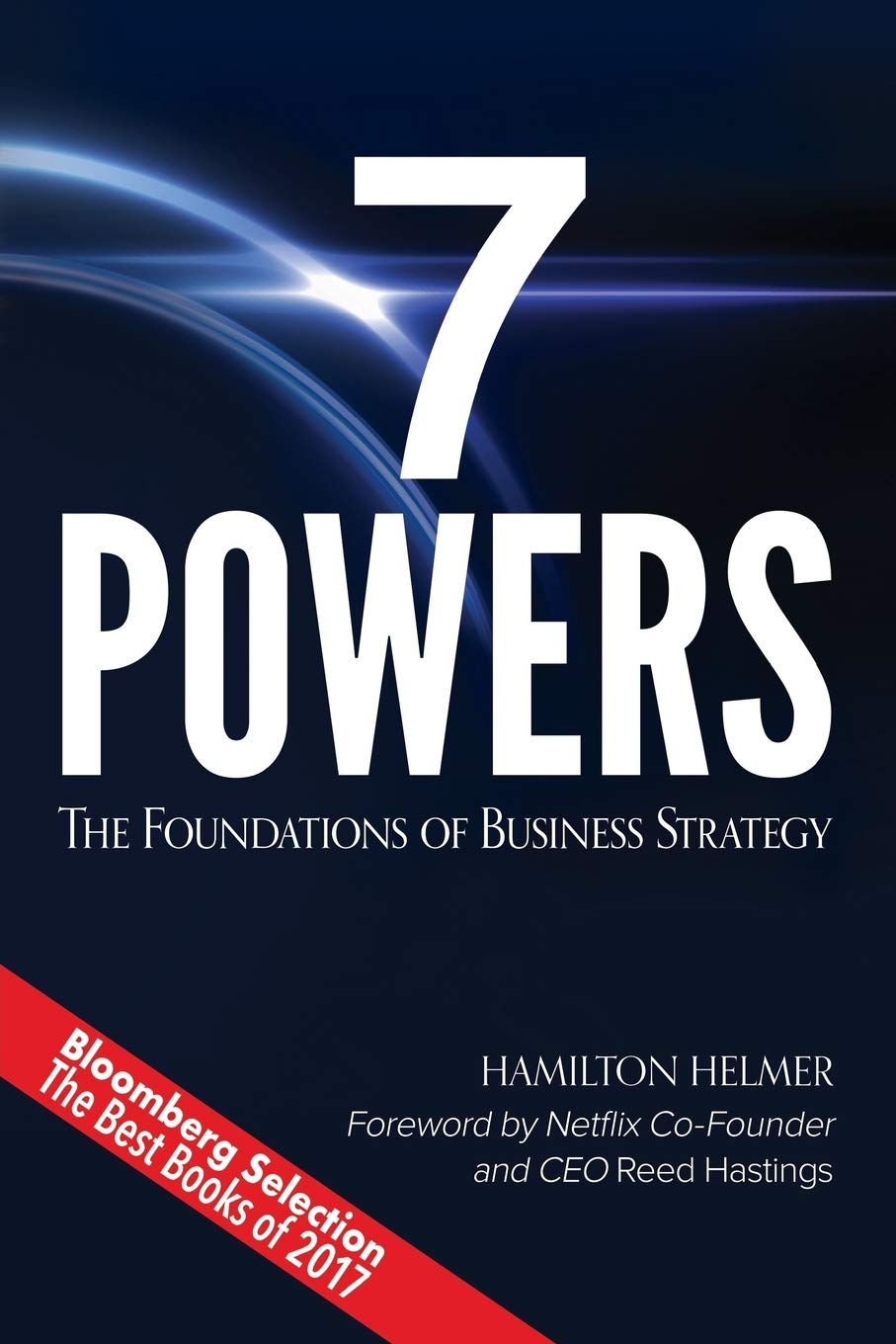
Interview Highlights
5 exchanges- Q
So there's something kind of interesting here, which is I was trying to figure out if I would describe this as a partnership. David, you and I are partners in Acquired. We together benefit from the upside and the downside. That is what makes a partnership. Is this a partnership? Is there any scenario where Jordan has any downside, or is all of the downside owned by Nike?
Ben Gilbert asked02:21:07ADavid Rosenthal answeredNo. All of the downside belonged to Nike, because the deal guaranteed Jordan a $2.5 million minimum payment over five years — a pittance today, but at the time huge money that nobody else was getting. Nor was Jordan a willing partner: he didn't want to work with Nike, which he saw as the brand of second-rate pro players; as a teenager he wanted Adidas, the brand of hip-hop, break dancing and shell-toes sneakers. So Jordan essentially wasn't Nike's partner, and Nike 'backed up the truck' for him anyway — partly in variable compensation, partly in cash. Nike had no leverage and Jordan had all of it, producing a landmark deal still unmatched, to this day, in the total dollars that have flowed to an athlete because of it.
- Q
So why did they sell so well? That's sort of this interesting $126 million in the first year. Like, why was the demand for them crazy? Did people just love Michael Jordan?
Ben Gilbert asked02:27:02ADavid Rosenthal answeredMarketing. In 1984 Jordan started wearing modified black-and-red Air Ships in preseason and warm-ups, before the Air Jordan 1 was even finished — and to this day no footage exists of him wearing them in a game, so it isn't certain the famous incident ever happened. The league pushed back: a letter that never named the shoe said black-and-red colors violated league policy, with fines of $1,000 for a first infraction, $5,000 for a second, maybe $10,000 for a third — a big tab over an 82-game season. Whether dollars ever changed hands is unknown; it may have been pure threat. Nike made it the 'banned' commercial: the camera pans down to Jordan's black-and-red shoes, black bars slap over them, and the message is that the shoe is so great the NBA outlawed it — go buy it at your local retailer. People went nuts.
- Q
there's a pureness to that brand premium concept. Does Nike really have a brand premium? Or is it the athletes that have the brand, and Nike scale economies let them buy the athletes— brands, right? As Ben Thompson would put it, wholesale transfer pricing. Where actually the athletes are the ones that sort of hold the power, and Nike's happy to pay out for it, and pass through all the profit pool to the pinnacle athletes. Unquestionably, that was the case in 1984 with Michael Jordan, and then again in 1987-88 when they renegotiated the deal.
Ben Gilbert asked03:12:36ADavid Rosenthal answeredOn the staple products, no. Dunks, Air Force Ones and the $160–180 running shoes are priced the same as the equivalent Adidas and New Balance pairs — people are more likely to buy the Dunk Low SB than the Adidas equivalent, but they don't pay more for it. Where the brand differentiates, Nike has either decided not to, or can't, raise prices; assuming the brand power is real, that looks like a conscious choice not to capture the value — and there is a big trap in overestimating Nike's brand value in the first place. Still, the brand is real: it shows up not in pricing but in purchase behavior, where plenty of customers simply never look at a competitor and only buy the Nike version.
- Q
Is Nike a shoe company?
David Rosenthal asked03:32:57ABen Gilbert answeredYes — in the same sense Nvidia or Qualcomm is a 'fabless' chip company. Nike works with only two or three really big footwear factories, dictating terms, sourcing the materials itself and running heavy audits — unlike its apparel business, which spans thousands of custom manufacturers. But shoe manufacturing, unlike semiconductor manufacturing, isn't very capex-intensive to start and holds little process power, so the foundry-equivalent layer is highly fragmented. The scale advantage is being the player big enough to dominate capacity in the limited number of top-tier, fully audited factories. And the amusing edge case: Nike manufactures zero shoes, but it manufactures 100% of the nitrogen-filled air bags — in Oregon, because that part is a trade secret.
- Q
I have one that I've been trying to think on, and at one point in the research I wrote down: when you sell commodities, brand matters a lot. Is Nike differentiating a commodity with their brand, or are they not in the commodity business?
David Rosenthal asked03:42:45ABen Gilbert answeredBifurcated. The prestige models — Jordans, Retros, Vaporflys, the $150-plus shoes — are not commodities; they are products with real R&D differentiation (the Vaporfly was by far the best running shoe on the market for two whole years). But Nike also sells enormous volumes of $50–70 pairs like the Monarch — a high-margin 'dad barbecue shoe' that no athlete ever wore — which are objectively commodities made super differentiated by the Nike brand on them (and, ironically, the Monarch has lately caught on with Gen Z). Asked directly whether Nike is a product company or a marketing company, Phil Knight answered: a marketing company, with the product as its most important marketing tool. The counter-view: the athletes are the most important marketing tool, and the product is the monetization method for athlete-driven marketing — Nike succeeds because it built the best brand, the most amazing distribution and the most tear-jerking marketing in the world. Even the product story ('the Kobes rose once the Adidas shoes sucked') doubles as convenient soap-opera narrative for the athlete show Nike is selling, which is why Nike's strategy has clearly been to celebrate athletes, while Adidas celebrates eyeballs — rappers, musicians, celebrities, anyone with attention.