
Adobe has a big problem
Executive Summary
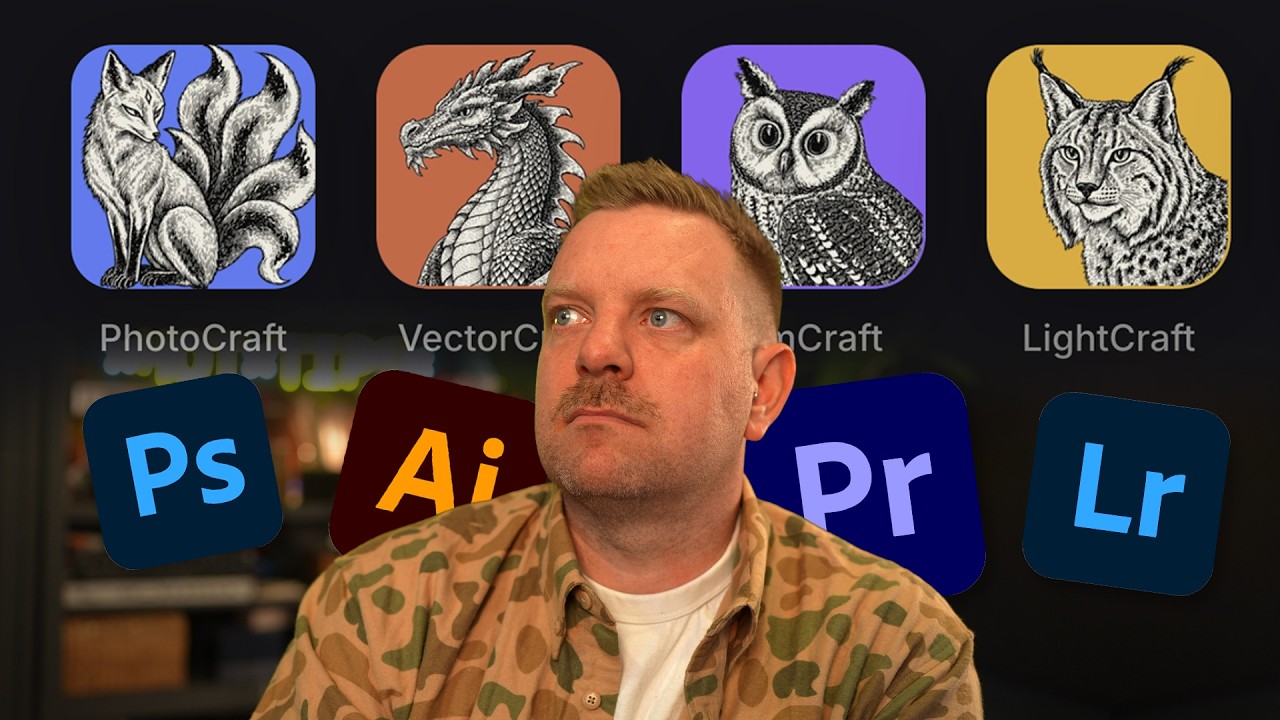
A two-week-old clean-room reimplementation of most of the Adobe suite triggers the episode. Scott — a 25-year Photoshop user who has disliked Adobe publicly since 2017 and pays $80 a month only because nothing else comes close — tests the port on his real files and reports that layered filter stacks, blend modes, masks, and text come through nearly perfectly, faster than Photoshop, with the UI built in Rust on its own crate. Clean-room means one agent documents the application and a separate implementation agent, which never touched the original, writes the code; whether that was truly followed is unverified, but thousands of tests and fixture files exist. The hosts place the event in the industry moment: four months after 'where are all the vibe-coded Photoshops,' UI interaction remains AI-generated software's weakest point (collapse behaviors, control-click masking, drag-and-drop), and a two-gigabyte seven-artboard file crashes the app. The Figma MCP controversy runs alongside — Figma gatekeeps tool approval while platforms from Amazon to Twitter wall agents off, echoing the API wars — and Dylan Field's clapback at Anthropic lands because Anthropic too restricts where subscriptions may run. The conclusions: the Photoshop replacement will not be a free clone but a generational shift, as Figma was for design; and two moats remain for creative software — genuinely good UI interaction, and someone who cares past two days — illustrated by the audio crackles and dropped frames that full-time Adobe employees exist to chase, and by DaVinci Resolve's cadence of useful releases as the model winner.
Chapters & Key Takeaways
7 takeawaysA clean-room port of roughly 70–80% of the Adobe suite appeared with commits going back only two weeks — and opened Scott's real layered Photoshop files nearly perfectly, faster than Photoshop.
Clean-room splits the work: one agent documents every surface and feature, a separate implementation agent that never touched the original writes the code — with thousands of tests and fixture files as the evidentiary proxy.
UI interaction is the weakest point of AI-generated software: hundreds of UI tests exist, but the fine interaction semantics — control-click masking, drag-and-drop, collapsible panels — are not there yet.
The Figma MCP gatekeeping (Pi blocked; approval via a Google form answered 'not accepting') is the API wars returning: platforms want agent traffic and money flowing through themselves.
The replacement for Photoshop will not be a free clone but a generational shift, as Figma was for design — and you almost do not know what it is until somebody does it.
Two moats remain for creative software: genuinely good UI interaction (why Figma won), and someone who cares about the project past two days.
ffmpeg absorbed many low-level video problems, but the audio crackles and dropped frames on weird hardware remain — the paper cuts full-time Adobe employees exist to fix, and the reason error capture should ship first.
Deep Read
What Happens When an AI Team Clean-Room Ports Photoshop in Two Weeks?
On Syntax, a clean-room reimplementation with a two-week commit history opens real layered Photoshop files nearly perfectly and faster than Photoshop. The hosts' read: the gap is interaction polish, platform gatekeeping is returning, and two moats remain — UI quality and caring past two days.
Read the full articleInterview Highlights
3 exchanges- Q
What does a 'clean room' reimplementation actually mean here?
Scott Tolinski asked06:30AScott Tolinski answeredScott explains, after Wes declines: straight reverse engineering of someone's software is legally dubious — you cannot just crack it open and reimplement it, however much you hate Adobe. A clean room splits the work: one agent goes through the entire application documenting every surface, feature, and behavior, and passes descriptions and tests to a separate implementation agent that has never touched the original. Whether this project truly did that, Scott does not know — but he notes there are thousands of tests and thousands of Photoshop files being tested against, and the same for Illustrator, the video editor, and the rest.
- Q
Will the thing that replaces Photoshop be a free clone — or something generationaly different?
Wes Bos asked18:07AWes Bos, Scott Tolinski answeredWes's answer is the latter. Nobody using Adobe products is happy about it, but they are the best and the industry standard, so a like-for-like free clone is not the replacement. The precedent is Figma: designers moved out of Photoshop (via Illustrator and Sketch) not to a cheaper clone but to a sufficiently new evolution — multiplayer, browser-anywhere — that rewired how design works. Scott adds that everyone is trying to crack the next form of video and photo editing and nobody has; whatever lands will not be the same Photoshop but free or faster, because Adobe is adding AI too — it must be a generational shift, and as with Figma, you almost do not know what it is until somebody does it.
- Q
What moat actually protects creative software like Photoshop in the AI era?
Wes Bos asked21:34AWes Bos, Scott Tolinski answeredWes proposes two. First, genuinely good UI interaction — the itty-bitty clicking, dragging, and pasting — which is why Figma originally won, and whoever cracks a really good photo-editing UI with AI will win this round; the weakest point of AI-generated apps is exactly that interaction layer, with its state machines all the way down. Second, someone who cares — riffing on his own tweet that 'the only moat left is caring about your project past two days.' Scott illustrates with video: ffmpeg solved many low-level primitives, but audio crackles and dropped frames on weird hardware remain, and at Adobe people's full-time jobs are fixing exactly those seven-or-eight paper cuts; both hosts wish this project shipped error capture so a fixer agent could even begin.