
Europe Wants U.S. To Fight Russia
Executive Summary
A host-only Thursday episode built around one thesis: Ukraine is being shattered, and Europe's answer is escalation designed to drag the United States back in. Mercouris opens with the military picture — Putin's Bishkek press-conference summary, since corroborated by swathes of other information: Orekhov about 50% under Russian control and mostly encircled, Dobropillya encircled, fighting around Lyman, the capture of Sviatohirsk (the Orthodox center, town if not monastery), Kozacha Lopan in the Kharkiv region bringing the Russians closer to Kharkiv city with Ukrainian troops apparently surrounded in the northeast — and Kyiv pounded every night. Then the desperation symptoms: Zelensky's Telegram video saying the allies were on holiday, and the X statement about closing Russian airspace — physically impossible for the biggest country in the world — reviving Fedorov's early-summer plan for mass attacks on Moscow and St. Petersburg airports, threats the Russians describe as terrorism. Europe's hardliners add their own steps: the bizarre Leipzig drone beside a Ukrainian Antonov 124 ('the dumbest false flag incident in all of history,' in Christoforou's view), Italy stopping a Cameroonian-flagged ship, Norway seizing a Russian ship in the Arctic — all, in Mercouris's reading, to create an atmosphere of escalation whose ultimate purpose is getting the United States back into the military picture, to Ukraine's rescue and Europe's, once a conflict with Russia is provoked. The wildest symptom is a many-hours gunfight in Kyiv between the state's own security services — the SBU, loyal to Zelensky, and the HUR of Budanov's earlier leadership — the SBU arresting people connected with the HUR, the HUR moving to protect them, reports of killed and injured. At the rumor's center, per Christoforou's relay: a detainee who might snitch on Budanov, and Budanov's men sent to take him back. A well-informed blogger adds the economic layer — a fight for control of the scam call centers that specifically target Western and European citizens while the EU looks completely away, with Monaco-oligarch echoes — so the reading: people worried the money flows will stop, fighting over them while the flows still continue. Then the American half of the hour: Bessent telling Fox News that Ukraine is to blame for the energy-price shock because it went after Russian refineries — met with the retort, who told them to, and who gave them the targeting and satellite data, Mr. Blinken? — plus Blinken's apparently very friendly G20 meeting with Siluanov: signs, perhaps, that the Americans are starting to shift their views. Putin's press conference supplies the frame: Russia does not negotiate with terrorists, all but calling Zelensky one; Ukraine crumbling sooner or later, no date given. The Svalbard seizure gets the episode's fullest treatment: not a military ship, not a tanker, not even a grain carrier, but a civilian passenger ship that also does scientific research, tied — we are told — to Naftogaz's $4bn lawsuit, the idea being to hand it over as compensation; a pattern of harassment alongside the Mediterranean seizure of a non-Russian ship carrying Russian oil. With Putin's piracy instruction to the Russian Navy in the background and — as far as Mercouris is aware — no court judgment justifying the seizure, symmetric seizures of European ships are all but certain, and intentional: the point is to provoke them, pressure the Americans into action, and create a direct clash between Russians and Americans — the only way now, in this reading, to prevent Ukraine going down. The last movement is the structure under the news. An American economist's article: a group within Europe — Baltic-Nordic in concentration, with Germans and Britons too — thirsts for direct confrontation with Russia and is maneuvering the United States into it; vassals, yes, but vassals sometimes manipulate their overlord, with historical examples. It is for the Americans to put their foot down — release the ship, tell Meloni's Italy to stop — except the Americans are not united: a Blinken might prefer the crisis avoided, some in the Pentagon too, others in the intelligence community as on-board as anyone in Europe, and a president prepared for extraordinary acts of duplicity towards the Russians, which is why they don't trust him. The dynamic runs both ways: the Americans would rather the Europeans fight Russia with the US behind the curtain orchestrating — Ukraine was only ever a proxy keeping Russia busy, and Europe is meant to pick up where it leaves off; for hawks and doves alike Ukraine is a functional question, the hardliners' real focus being Russia and Washington's internal battles (Ratcliffe not wanting to lose out to Bessent). If Ukraine goes down it is a blow, not an existential problem. The close: staying on the sidelines of a Russia-Europe war will be all but impossible for the United States — the weapons, the arms purchases, the intelligence assistance and the drone offensive see to that; the provocations that could actually pull the US in are tiered (Baltics and Romania couldn't matter less, Poland a little, Germany and the UK are the real risk — which is where the false-flag attempts have moved); and the leverage is real: an ambassador's phone call brings the British cabinet, and intelligence assistance switches off at the pressing of a switch, 90% of the traffic flowing in that direction.
Chapters & Key Takeaways
10 takeawaysUkraine is being absolutely shattered — pounded from the air, blockaded on its coastline, losing front-line positions — with Putin's Bishkek front summary corroborated by swathes of other information.
The desperation symptoms: Zelensky's allies-on-holiday video and the X statement on closing Russian airspace — physically impossible — reviving Fedorov's plan for mass attacks on Moscow and St. Petersburg airports, read by the Russians as terrorism.
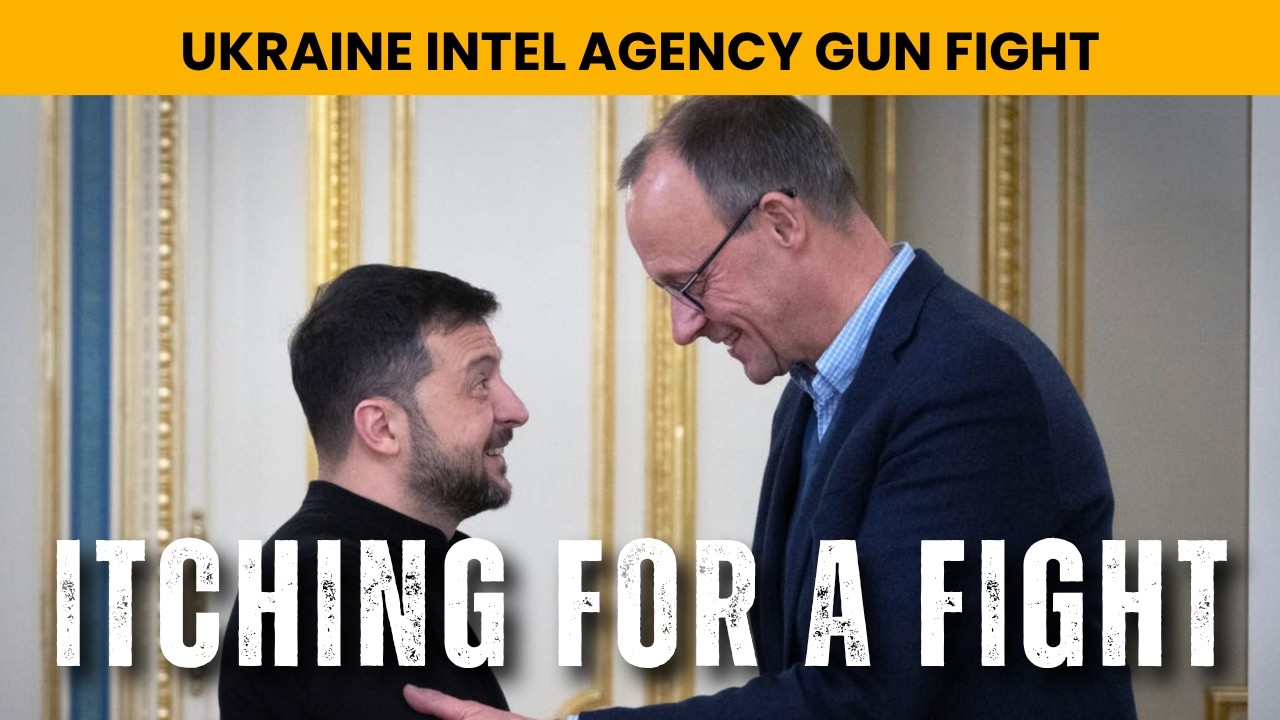
A many-hours gunfight between the SBU and the HUR in Kyiv is a sign things are getting very bad: factions — possibly fighting over money flows from scam call centers — now openly fighting each other.
Bessent blaming Ukraine for the energy-price shock, the who-gave-them-the-targeting-data retort, and Blinken's friendly G20 meeting with Siluanov: signs the Americans may be starting to shift their views.
Putin's press conference: Russia does not negotiate with terrorists — all but calling Zelensky one — Ukraine crumbling sooner or later without a date, and on striking the leadership, 'someone to talk to' left half-finished with 'we have tools.'
The ship seizures are intended provocation: with no court judgment justifying them and Putin's piracy instruction standing, symmetric seizures of European ships are all but certain, meant to pressure the Americans into action and create a direct Russian-American clash.
The economist's structural point: a Baltic-Nordic-anchored war party inside Europe is trying to maneuver the United States into confrontation — vassals themselves sometimes manipulate their overlord into such conflicts.
For hawks and doves alike Ukraine is a functional proxy; the Americans would prefer Europe to fight Russia with the US behind the curtain orchestrating, and Europe is meant to pick up where Ukraine leaves off.
The provocations that could pull the US in are tiered by country: the Baltics and Romania couldn't matter less, Poland a little more, Germany and the UK are where the real risk lies — which is why the false-flag attempts have shifted there.
Staying on the sidelines of a Russia-Europe conflict will be all but impossible for the United States — the commitment ratchet (weapons, arms purchases, intelligence, the drone offensive) plus overwhelming involvement pressures; the off-switch over London and Berlin is real.
Deep Read
From a Kyiv Shootout to a Seized Ship: The Escalation Meant to Pull America Back Into the War
The Duran's two hosts read the week's Ukraine news as one connected machine.
Read the full articleInterview Highlights
5 exchanges- Q
What is actually happening to Ukraine — and why is Europe escalating?
Alex Christoforou asked00:00AAlexander Mercouris answeredThe key thing: Ukraine is being absolutely shattered — pounded from the air, blockaded on its coastline, losing positions on the front lines. At Bishkek Putin summarized the front, corroborated by swathes of other information: Orekhov about 50% under Russian control, mostly encircled; Dobropillya in Donbass largely encircled; fighting around Lyman; the capture of Sviatohirsk, a center of Russian Orthodoxy; Kozacha Lopan in the Kharkiv region — a town, not a village — bringing the Russians closer to Kharkiv city, with a group of Ukrainian troops apparently surrounded in the northeast. Kyiv is pounded every night, with devastating damage. Then the symptoms of desperation: Zelensky's video statement that Ukraine's allies were on holiday while the country was blasted, and his X statement about closing down Russian airspace — physically impossible for the biggest country in the world — reviving Fedorov's early-summer plan for mass attacks on Moscow and St. Petersburg airports; threats the Russians describe as terrorism. Europe's hardliners take their own steps — the bizarre Leipzig drone incident near the Ukrainian Antonov 124, Italy stopping a Cameroonian-flagged ship, Norway seizing a Russian ship in the Arctic — all, in this reading, to create an atmosphere of escalation whose ultimate purpose is to pull the United States back into the military picture once a conflict with Russia is provoked.
- Q
What is the SBU–HUR shootout in Kyiv really about?
Alex Christoforou asked07:10AAlexander Mercouris answeredA many-hours gunfight in Kyiv between Ukraine's two intelligence and security services — the SBU, loyal to Zelensky, and the HUR military intelligence previously headed by Budanov: the SBU arresting people connected with the HUR, the HUR moving to protect them, with reports of dead and injured. At the center, the rumor of a detainee who might snitch on Budanov — and Budanov's men sent to take him back. A well-informed blogger adds another dimension: a fight for control of scam call centers, a huge business in Ukraine that specifically targets Western and European citizens while the EU looks completely away, with echoes of the Monaco oligarch story and its court case. The conclusion: people are beginning to worry that the money flows are going to stop, and are fighting over them while the flows still continue. Whatever the precise trigger — turf war over economic assets is a plausible reading — it is clearly a sign that things are getting very bad: tensions inside Kyiv are growing and the various factions are now openly fighting each other.
- Q
Is seizing Russian ships piracy — and what is it meant to provoke?
Alex Christoforou asked15:10AAlexander Mercouris answeredNorway seized not a military ship, not an oil tanker, not even a grain carrier, but a civilian passenger ship that also does scientific research, ferrying people from Russia to Svalbard — tied, we are told, to Naftogaz's $4-billion lawsuit against Russia, the idea being to hand the ship over to Ukraine as compensation. That comes nowhere near meeting whatever compensation claim Naftogaz says it has; it is obviously part of a pattern of harassment, alongside the Mediterranean seizure of a ship that was not Russian-owned and not Russian-flagged, only carrying Russian oil. A few weeks ago Putin instructed the Russian Navy to treat the seizure of Russian ships as piracy on the high seas — and there is no legal decision, no court judgment justifying the seizure of the Svalbard ferry. So European ships being seized in response is all but certain — and intentional: these attacks on shipping in the Mediterranean and the Arctic are meant to provoke exactly that, in the hope of getting the United States somehow involved, pressuring the Americans into action and creating a direct clash between the Russians and the Americans — the only way now, in this reading, to prevent Ukraine going down.
- Q
Are Europe's vassals trying to maneuver their overlord into war with Russia?
Alex Christoforou asked18:04AAlexander Mercouris answeredA very good article by an American economist makes the point: there is a group of people within Europe — concentrated geographically in the Baltic and Nordic region, but also including people in Germany and Britain — who are thirsting for a direct military confrontation with Russia and trying to maneuver the United States into it. Yes, they are vassals; but the economist's exact point is that sometimes vassals themselves try to manipulate their overlord into these kinds of conflicts, with historical examples where that has happened. It is for the Americans to put their foot down: tell the Europeans this must stop, tell the Norwegians to release the ship, tell Meloni's Italy to stop doing this. The catch is that the Americans themselves are not united — a Blinken, given the many economic problems, might prefer a crisis with the Russians avoided, probably some in the Pentagon too; others in the intelligence community are as fully on board with confrontation as anyone in Europe. The president leans now one way, now the other, and is prepared to engage in extraordinary acts of duplicity towards the Russians — which is exactly why the Russians don't trust him. A bad situation.
- Q
If Europe and Russia clash, can the United States really stay on the sidelines?
Alex Christoforou asked25:36AAlexander Mercouris answeredThe Americans are perfectly relaxed about a conflict between Russia and Europe — but may not be realistic about what follows: the pressures for them to become involved will be overwhelming, and remaining completely on the sidelines extremely difficult. The right way — the advice given in the summer of 2024 — was to say: Russia is not our problem, Ukraine is not our problem; take on the Russians by yourselves. Having instead supplied weapons, let the Europeans buy American arms for Ukraine, continued intelligence assistance and orchestrated the drone offensive, walking away is now all but impossible; what is left is calling the vassals together and saying: this is where it stops. As for which provocations can actually pull the US in: the Baltics or Romania — Estonia, Lithuania, Latvia — could not matter less; the neocons did not care about those drone incidents. Poland starts to matter more; Germany or the UK is where the real risk lies — which is why the false-flag attempts have shifted to Germany and the UK. And the leverage exists: American influence over London and Berlin is enormous — the ambassador only has to call in the British cabinet. Switching off intelligence assistance takes the pressing of a switch, and 90% of the traffic flows in that direction.