
Modi, Erdogan and Tokayev Gang Up on Putin
Executive Summary
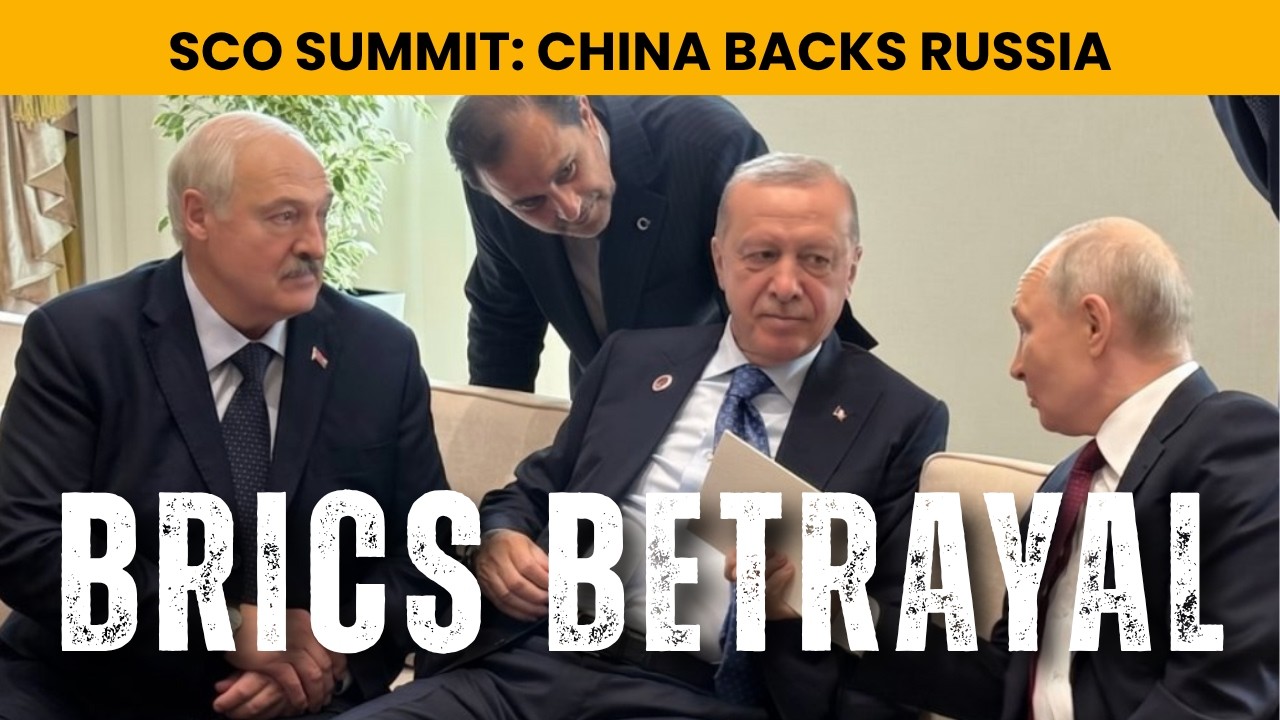
A host-only episode on one summit: at Bishkek, in Mercouris's telling, something that closely approximated a gang-up against Putin took place — and the leader was Narendra Modi. Over the course of the Putin meeting Modi said outright that there has to be peace, all the world wants peace between Russia and Ukraine, that India is the country of Mahatma Gandhi and of the Buddha and always stands for peace, and hostilities should end as soon as possible. From the footage Mercouris reads Putin as furious — extremely angry to be lectured that way. Erdogan was talking in much the same way, and Tokayev, Kazakhstan's president and supposedly an ally, apparently said the same things; one leader — perhaps the most important one, Xi Jinping — did not. Putin's own press conference supplies the texture: the complaint that after the Black Sea action the Ukrainians went running to all their friends — the Arab states, India, Turkey — begging them to get Russia to stop; the denial of special pressure ('we merely listened to our respected friends') which, in the hosts' hermeneutic, means they did have a problem with it. The outcome: Putin conceded nothing, refused a ceasefire, had Xi's backing, and the final statement did not refer to Ukraine at all — in effect a diplomatic victory, under considerable pressure from erstwhile friends. Then the mechanism. Do Modi and Tokayev really care about a ceasefire? No — none of them care about Ukraine or about phone calls from Zelensky, whom none of them like; it is the Americans calling them and telling them to put pressure on Putin. What Mercouris learned in Moscow: some BRICS leaders and officials are afraid of sanctions — not just against their countries, against them personally — with others in these governments nervous about secondary sanctions. What particularly angered Putin was the packaging: trotting out the Buddha and Gandhi over a country perfectly prepared to use force, in a conflict with Pakistan just a year ago. The cost to Russia is rhetorical — having to talk about possible negotiations to keep BRICS and the SCO together — while Putin's press conference makes clear he no longer believes in it. And Bishkek makes BRICS look weak: since Kazan in October 2024 the payment-system arrangements (BRICS Pay and all of that) went nowhere because the members are scared of the Americans. The axis that matters inside BRICS is China-Russia, and China behaved differently: an extraordinarily long readout of the Xi-Putin meeting that did not once mention Ukraine, talk that Power of Siberia 2 is resolved with an announcement soon — and, in Mercouris's no-doubt-at-all reading, it was China that ensured Ukraine stayed out of the final statement, over the preferences of Modi, Tokayev and Erdogan. Christoforou supplies the leverage arithmetic — India needs Russian oil, Kazakhstan is going nowhere without good relations with Russia, so the leaders will say what they must to get the US off their backs — and Mercouris qualifies it: the Russians are not that relaxed, because Bishkek exposed that their erstwhile allies are not fully to be trusted. Moscow notices the unstinting support Ukraine gets versus the very conditional support Russia receives; the Russians increasingly feel they are taking on the entire collective West by themselves, never so starkly exposed as at this conference, after almost five years of explaining to friends who showed complete indifference. The counterweights: Putin's softness was itself the friends' doing — years of please-don't-go-too-hard — perhaps a wake-up call now; and in the war's first two years Russia visibly needed its friends. But the trust ledger is short: if there is any reliable ally it is China — and even more North Korea, whose full, unmatched commitment explains the extraordinary flowering of that relationship. The close is a forecast built on the winning-wars doctrine: alliances are made stable by winning. The hedging was information-war-made — the New York Times stalemate and collapsing-economy line fed doubts in India and Kazakhstan; as the reality can no longer be covered up, the Indias, Kazakhstans and Turkeys will line up behind Russia. But a decisive Russian victory changes the balance of power, so expect signs of concern in Ankara, Delhi, Astana and Brasilia: Turkey loses its strong Black Sea position to a Russia controlling the entire northern coast plus Crimea; Kazakhstan faces the giant in the north with a large part of its population fundamentally aligned with Russia; Georgia's conversations were already there; India is the different category — a very large body of opinion would quietly welcome a decisive Russian victory as a counterbalance with the United States and China. A period of readjustment follows; Kazakhstan gets over it, while for Turkey the problem is real — with the Black Sea.
Chapters & Key Takeaways
10 takeawaysSomething that closely approximated a gang-up against Putin happened at Bishkek, led by Narendra Modi's public Gandhi-Buddha peace lecture, with Erdogan and Tokayev talking the same way — and only Xi Jinping not pressing.
The driver is US pressure, not genuine concern: the hedging states' leaders and officials fear personal and secondary sanctions, none of them care about Ukraine or Zelensky's calls — it is the Americans telling them to pressure Putin.
Putin conceded nothing at Bishkek: no ceasefire, Xi's backing, and a final statement that did not refer to Ukraine at all — in effect a diplomatic victory, though the pressure from erstwhile friends was considerable.
The cost to Russia is rhetorical — talking about possible negotiations to keep BRICS and the SCO together — while Putin's own press conference makes absolutely clear he no longer believes in it.
BRICS looks collectively weak and scared: since Kazan in October 2024 the payment-system arrangements went nowhere, while the axis that actually matters inside BRICS — China-Russia — forges ahead: a Ukraine-free readout and Power of Siberia 2 reportedly resolved.
Bishkek exposed that Russia's erstwhile allies are not fully to be trusted; Moscow notices the unstinting support Ukraine gets versus the conditional support Russia receives, and increasingly feels it is taking on the entire collective West by itself.
The counterweight to the disillusionment: Putin's softness on Ukraine was itself shaped by these friends' years of please-don't-go-too-hard pleas, and in the war's first two years Russia visibly needed them — Bishkek may be a wake-up call.
The trust ledger after Bishkek is short: if Russia has any reliable ally it is China — and even more North Korea, whose unmatched full commitment to the war explains the extraordinary flowering of that relationship.
The hedging was information-war-made — the New York Times stalemate and collapsing-economy line fed doubts in India and Kazakhstan — and as the reality can no longer be covered up, the hedgers will stand firmer behind Russia.
A decisive Russian victory changes the international balance of power: expect signs of concern in Ankara, Delhi, Astana and Brasilia — Turkey loses its Black Sea position, Kazakhstan faces the giant in the north, while India would quietly welcome the victory as a counterbalance.
Deep Read
A Gang-Up in Bishkek: The Ceasefire Pressure, the Bloc That Flinched, and the Alliance That Held
The Duran's two hosts return from the Bishkek SCO summit with one story told three ways: what happened in the room, who sent the pressure, and what it did to Russia's map of friends.
Read the full articleInterview Highlights
5 exchanges- Q
What actually happened to Putin at the SCO summit in Bishkek?
Alex Christoforou asked00:00AAlexander Mercouris answeredSomething that closely approximated a gang-up against Putin happened at Bishkek, and the leader was Narendra Modi. Over the course of the meeting Modi said outright that there has to be peace — all the world wants peace between Russia and Ukraine; India is the country of Mahatma Gandhi and of the Buddha and always stands for peace; hostilities should end as soon as possible. From the footage Mercouris read Putin as furious — extremely angry to be lectured by Modi in that way. Erdogan was talking in much the same way, and Tokayev, the president of Kazakhstan, supposedly an ally, apparently said the same things. Putin's complaint at his press conference: when the Russians took the action in the Black Sea, the Ukrainians went to all their friends and allies — the Arab states, India, Turkey — begging those countries to get Russia to stop. Asked whether Russia came under special pressure in Bishkek, he said no — they merely listened to their respected friends' contributions — which, when Putin talks like that, means they did have a problem with it. The outcome: Putin conceded nothing, refused a ceasefire, had the backing of Xi — and the final statement did not refer to Ukraine at all: a diplomatic victory, but the pressure from erstwhile friends was considerable.
- Q
Do Modi and Tokayev really care about a ceasefire — or is Washington the driver?
Alex Christoforou asked05:35AAlexander Mercouris answeredIt is US pressure — and what particularly angered Putin about Modi's comments was the packaging: trotting out the Buddha and Mahatma Gandhi to claim India is a country that always stands for peace, when India is perfectly prepared to use force to defend its interests — it was in a conflict with Pakistan just a year ago — and is not a country that turns the other cheek. The mechanism, as learned in Moscow: the Russians have concluded that some BRICS leaders and officials are afraid of sanctions — not just sanctions against their countries, but against them personally — and there are others in these governments nervous about American sanctions or secondary sanctions. None of them care about Ukraine, or about phone calls from Zelensky, whom none of them like; it is the Americans who have been calling them and telling them to put pressure on Putin. What it costs Russia: having to listen to this sort of thing, and to make rhetorical concessions — talking about the possibility of negotiations with the Ukrainians — in order to keep BRICS and the SCO together, when Putin's own press conference makes it absolutely clear he no longer believes in it.
- Q
How weak is BRICS — and which partnership inside it actually matters?
Alex Christoforou asked10:11AAlexander Mercouris answeredAfter the BRICS conference in Kazan in October 2024, when all the arrangements were made to set up the various BRICS payment systems — BRICS Pay and all of that — basically nothing happened, because first the Brazilians and then others showed extreme nervousness about moving forward, all of them scared of the US — leaving the Russians both scornful and deeply frustrated, and BRICS looking collectively weak. The axis that absolutely matters within BRICS is China-Russia — and China's behavior at Bishkek was completely different. The Chinese readout of Xi Jinping's meeting with Putin, extraordinarily long as always, did not once mention Ukraine: the sense is that the Chinese have put the topic totally to one side and are forging forward with the relationship — with a lot of talk that the Power of Siberia 2 pipeline discussions are now resolved and an announcement could come very soon. Mercouris has no doubt it was China that ensured Ukraine was kept out of the SCO summit declaration's final statement: Modi, Tokayev and Erdogan would undoubtedly have wanted some reference to Ukraine, if only to keep the Americans happy, and the Russians by themselves might not have had enough authority to prevent it — China and Russia together ensured Ukraine was not mentioned at all.
- Q
After Bishkek, whom does Russia actually trust?
Alex Christoforou asked13:17AAlexander Mercouris answeredThe Russians are not quite as relaxed about it as the leverage arithmetic suggests. What Bishkek exposed is that their erstwhile allies are not fully to be trusted on this issue. There are people in Moscow who compare the absolutely unstinting support Ukraine gets from its allies with the very conditional support Russia gets from its own; that difference is noticed, it irritates, and it might have impact in the future. Even China draws commentary — drone components — though the rhetorical support Ukraine enjoys is on an entirely different level. Increasingly the Russians feel they are taking on the entire collective West by themselves — never so starkly exposed as at this conference, after almost five years of explaining the situation to friends who show complete indifference to it. Two qualifications: the friends' pleas did shape policy — Putin went soft on Ukraine and the collective West for years at BRICS and Eurasian friends' urging, a possible wake-up call — and in the first two years of the war Russia visibly needed its friends and slow-walked its diplomacy accordingly. But if Russia has any reliable ally now it is China — and even more North Korea, whose extraordinary flowering of ties with Russia rests precisely on its full commitment, in a way no other country has matched.
- Q
What does a decisive Russian victory do to the hedging countries?
Alex Christoforou asked19:11AAlexander Mercouris answeredWinning wars is absolutely the way to establish stable long-term alliances — and the hedging ran the other way for years: because Putin went soft at his friends' urging, the Western information war could present Russia as stalled — stalemate in the New York Times, a collapsing Russian economy — feeding doubts in India and Kazakhstan about throwing their support behind Russia. As the reality can no longer be covered up, those countries will stand a little firmer behind Russia. But over the next few months, as Ukraine deteriorates, there will also be signs of concern in Ankara, Delhi, Astana and Brasilia: a decisive Russian victory changes the international balance of power, and that is unsettling. Turkey loses its strong position in the Black Sea if Russia ends up controlling the entire northern coast plus Crimea. Kazakhstan, facing the giant in the north — with a large part of its population fundamentally aligned with Russia — will be nervous, as conversations in Georgia already were. India is a completely different category: a very large body of opinion would quietly welcome a decisive Russian victory as a counterbalance with the United States and China. A period of readjustment follows: Kazakhstan gets over it; for Turkey the problem is real — with the Black Sea.