
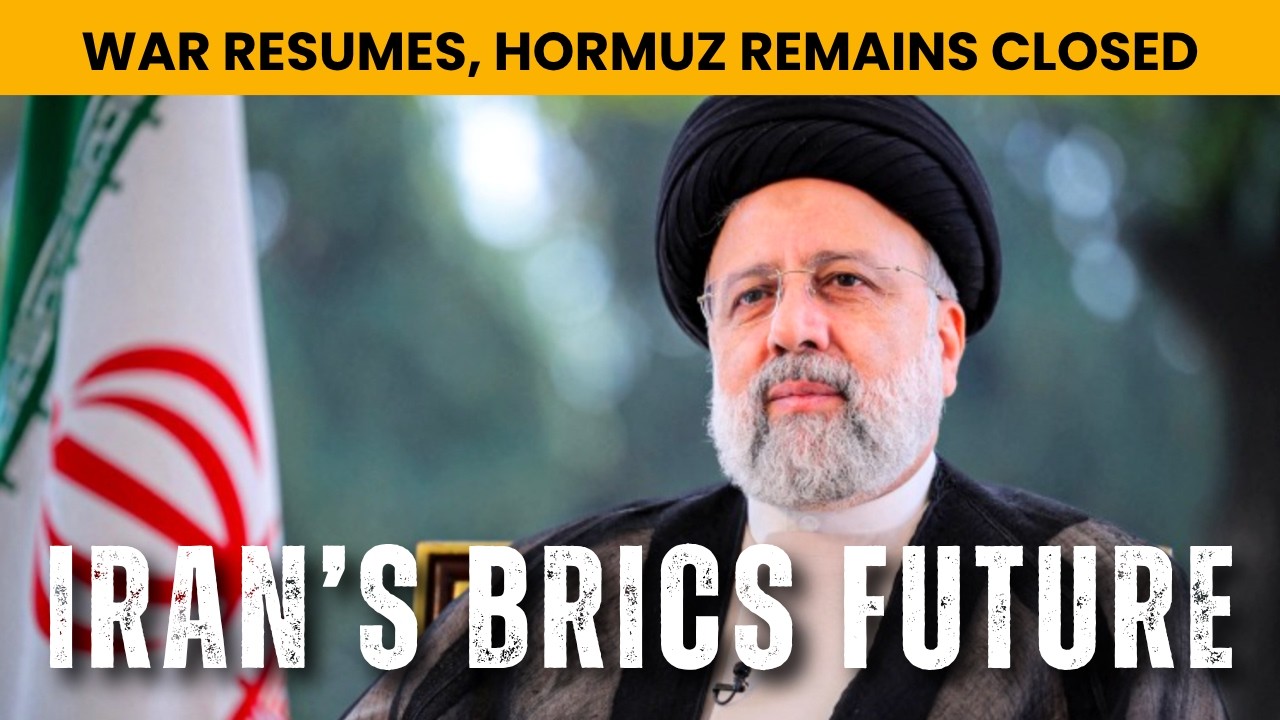
Raisi's BRICS Legacy Shapes Iran's Future as War Resumes
Executive Summary
A host-only episode broadcast September 6, 2026, as US-Iran military operations restart around the Strait of Hormuz. Christoforou's opener sets the dueling numbers: the administration claiming 30 to 40 ships out a night against roughly 140 when the Strait was fully open, tracking services saying about 10 — while Trump posts about Hormuz daily on Truth Social, down to renaming it the Strait of Trump. Mercouris's answer becomes the episode's spine: some ships have indeed been getting through on the southern route, and he cannot imagine that happening without the Iranians knowing and in some way green-lighting it. Iran, once again, is a very complicated country: the hardliners — concentrated in the IRGC but present in other agencies too — want confrontation, want the Strait kept completely closed as leverage, and hardly conceal their objective of pushing the Americans out of the Persian Gulf entirely. Against them stands Pezeshkian, responsible for an economy of very high inflation, budget deficits and falling incomes, who has just said in a speech that this is the moment to end the war: Iran is ahead on points, the political system is intact, make the deal while strong — meaning a return to something like the MOU with the Strait reopened, a view parliament speaker Ghalibaf shares, with sympathizers in the military and possibly inside the IRGC. The mechanism of the collapse: an informal arrangement had the Omanis letting ships through and the Iranians looking the other way, a first step toward gradually normalizing and returning to the MOU — until Trump, as so often, couldn't restrain himself: the Truth Social posts that the United States controls the Strait, the remarks suggesting no mood for compromise. The arrangement fell apart, the hardliners in Tehran regained the ascendancy, ships in the Strait were struck, and the fighting in effect resumed. Mercouris's own judgment: as of this recording the Strait of Hormuz is completely closed again — without some degree of Iranian complicity, no ship can pass. It is as simple as that. Christoforou pushes back that the MOU was never realistic or workable — the US wanted nothing to do with it, and Israel is never going to allow that type of deal — which draws out the diagnosis Mercouris really wants to make: the fundamental problem within Iran is that the entire discussion is exclusively centered around the United States. Deal with the Americans to rebuild the economy, or fight them and accept decades of hardship — and almost nobody in the upper reaches of the system is prepared to think of the alternatives: developing BRICS, strengthening relations with China, building stronger relations with Russia. The counterexample is Ebrahim Raisi, who thought in exactly those ways — brought Iran into BRICS, had close relations with the Chinese and the Russians, and on whose watch military contacts between the Russians and the Iranians began to grow and even burgeon — until he died in a helicopter accident, the nature of which has never been fully clarified, after which the whole discussion reverted, as if by default, to deal-or-fight. On the military question the verdict is ultimately probably not: the IRGC and Iran can wreak devastation across the Middle East — pipelines, energy facilities, desalination plants, a massive humanitarian crisis — but the United States is a superpower and Iran is not. Their own earlier prediction, that a war lasting longer than a week would swing the pendulum toward Iran, proved right; an indefinite war of choice would swing it gradually back to the Americans. By contrast, the hardliners are absolutely right that the Americans cannot be trusted and their long-term deals will be broken — which is precisely why the non-US options matter. Christoforou then reframes the whole war economically: all the fighting is about Hormuz because it holds the key to the entire war — if the US can get ships through, or make it appear ships are going through, the price of oil, interest rates and market risk stay moderated. Trump the salesman can take one ship and turn it into 30 or 40, and parts of the public, the financial institutions and the market will believe him — which is what Trump and Vance are trying to do. Iran's mirror-image logic: keep Hormuz closed to inflict pain on the US and the global economy until the US retreats. Mercouris's rejoinder: the wiser long-term game is to step out of the Hormuz paradigm altogether — the leverage it gives traps Iran in a confrontation with the United States. The Raisi chapter closes the argument: the Financial Times investigation — which Mercouris takes completely seriously, judging it based on real information obviously provided by a Western intelligence agency — shows the Russians have been providing Iran technical and military assistance to build up its defenses, with the timeline going all the way back to Raisi's presidency ('that's why they took him out'). Because of Raisi's connections food and gas come from the north; BRICS states like China might help stabilize Iran's financial system; probably because of his role Iran improved its ballistic missile and drone technology — but Iran is resting on the benefits of his policies without building on them, slipped back into the false choice of a US deal or indefinite war with the Strait permanently closed. Christoforou's closing middle ground — a deal understood to be broken, buying five to ten years of buildup, a Minsk-type deal that Merkel said gave Ukraine time to build its military and that on the Russian argument gave Putin time to prepare for sanctions — draws Mercouris's assent: a coherent and intelligent policy, but one requiring the ground prepared carefully, with the president, prime minister, cabinet and military flowing constantly to Beijing, Moscow and the like to explain: we know the deal will be broken, we have a year at most — not five — we need time and help, do we have your support? Quiet contacts like Pezeshkian meeting Xi Jinping and Putin at the BRICS summit in Bishkek are never enough. And at the moment, he just doesn't see it.
Chapters & Key Takeaways
11 takeawaysThe episode's frame: the restarted US-Iran military operations are both about control of the Strait of Hormuz — and the two sides' public claims about transits (30-40 a night claimed, ~10 tracked, ~140 when open) cannot both be true.
The complicity reading: some ships have been getting through on the southern route, with enough external data to say so — and that cannot have happened without the Iranians knowing about it and in some way green-lighting it.
The faction map: IRGC-concentrated hardliners who want confrontation, oppose concessions, want the Strait kept completely closed as leverage and the Americans out of the Persian Gulf entirely — against Pezeshkian's deal camp, which owns the battered economy and wants the MOU back with the Strait reopened.
The collapse mechanism: an informal arrangement (Omanis letting ships through, Iranians looking the other way) was drifting toward a return to the MOU — until Trump's Truth Social posts that the US controls the Strait destroyed it, the hardliners regained the ascendancy, ships were struck, and the fighting in effect resumed with the Strait completely closed again.
The diagnosis: Iran's fundamental problem is that its entire discussion is exclusively centered around the United States — peace to rebuild the economy, or war and decades of hardship — with relatively few in the upper reaches prepared to think of the BRICS-China-Russia alternatives.
The Raisi counterexample: the previous president thought in those ways — BRICS membership, close Chinese and Russian relations, military contacts with Russia that began to grow and burgeon on his watch — and after his never-clarified death the discussion reverted by default to deal-or-fight.
The military verdict: ultimately probably not — Iran can wreak devastation across the Middle East but the US is a superpower; the hosts' own earlier pendulum prediction proved right, but an indefinite war of choice would gradually shift the advantage to the Americans, whose resources Iran alone cannot match.
The Hormuz logic, stated from the US side: it holds the key to the entire war — actual or merely believed transits keep oil prices, interest rates and market risk moderated, which is what Trump and Vance are managing, with Trump the salesman able to turn one crossing ship into a claimed 30 or 40.
The FT chapter: an article Mercouris takes completely seriously — real information obviously provided by a Western intelligence agency — confirms the Russians have been providing Iran technical and military assistance to build up its defenses, with the timeline going all the way back to Raisi's presidency.
The legacy argument: because of Raisi's connections food and gas come from the north, BRICS states like China might help stabilize Iran's finances, and probably because of his role Iran improved its missile and drone technology — but Iran is resting on those benefits without building on them, back inside the false choice.
The prescription: the Minsk-style middle ground — a deal understood to be broken, buying buildup time — is coherent and intelligent, but requires preparing the ground carefully with constant top-level flows to Beijing and Moscow; a year at most, not five; quiet contacts like Bishkek are never enough, and at the moment he doesn't see it.
Deep Read
The Strait Closes Again: Iran's Deal Camp, the FT's Russia Timeline and the Ghost of Raisi
Recorded as US-Iran military operations restart, this Duran episode is organized around one chokepoint and one question: who actually controls the Strait of Hormuz?
Read the full articleInterview Highlights
4 exchanges- Q
Who really controls the Strait of Hormuz — and why did the fighting restart?
Alex Christoforou asked00:00AAlexander Mercouris answeredSome ships have been getting through — but Mercouris cannot imagine that happening without the Iranians knowing and in some way green-lighting it. Iran's factions: the hardliners, concentrated in the IRGC, want confrontation, want the Strait kept completely closed as leverage, and hardly conceal their objective of pushing the Americans out of the Persian Gulf entirely. Pezeshkian, the president, owns the economy — very high inflation, budget deficits, falling incomes — and has just said this is a good moment to end the war: Iran is ahead on points, the political system is intact, make the deal while strong. He wants a return to something like the MOU, and parliamentary speaker Ghalibaf shares the view; sympathizers exist even in the military and possibly within the IRGC. Hence the informal arrangement — the Omanis letting ships through on the southern route, Iranians looking the other way — until Trump could not restrain himself, posted that the United States controls the Strait and signaled no mood for compromise. The arrangement fell apart, hardliners in Tehran regained the ascendancy, ships in the Strait were struck, the fighting in effect resumed — and as of this recording the Strait of Hormuz is completely closed again: without some degree of Iranian complicity, no ship can pass. It is as simple as that.
- Q
Why can't Iran's leadership see any option that isn't the United States?
Alex Christoforou asked06:44AAlexander Mercouris answeredThe fundamental problem is that the entire discussion is exclusively centered on the United States — for far too many people in the Iranian policy-making machinery it reduces to whether you can achieve peace with the Americans so you can rebuild the economy, or whether you have to fight them and accept decades of hardship until you win. Relatively few people in the upper reaches of Iran's political system are prepared to think of alternatives: developing BRICS, strengthening relations with China, building stronger relations with Russia. The previous president, Ebrahim Raisi, did think in those ways — he brought Iran into BRICS, had close relations with the Chinese and the Russians, and growing information shows military contacts between the Russians and the Iranians began to grow and even burgeon during his time. Then he died in a helicopter accident, the nature of which has never been fully clarified — and in his absence, unfortunately, the entire discussion within Iran has reverted, as if by default, back to whether or not to make a deal with the Americans, nobody looking for alternatives instead.
- Q
Does Iran have a path to a military victory over the United States?
Alex Christoforou asked10:15AAlexander Mercouris answeredUltimately, probably not. The IRGC and Iran can wreak devastation across the Middle East — destroy all the pipelines, the energy facilities, the desalination plants, create a massive humanitarian crisis — but the United States is a superpower and Iran is not. In a war of that kind extended indefinitely, the pendulum of advantage gradually shifts in favor of the Americans, whose resources Iran by itself is simply unable to match. The earlier prediction — that a war lasting longer than a week would swing the pendulum toward Iran — proved right, but an indefinite war of choice reverses it. There are uncertainties — a US economic crisis, a policy change in Washington, exhaustion with the length of the Middle East commitment — but none of those is a plan, and a long war of choice would be very reckless. By contrast, the hardliners are absolutely right that you cannot trust the Americans and cannot make long-term deals with them — such deals will be broken and leave Iran in an enormous position of disadvantage. Which is exactly the point: Iran has other options that don't involve the United States, and the Iranians don't seem to be thinking about them or interested in taking them — Pezeshkian remains focused on the Americans to an extremely unhealthy degree.
- Q
Could a Minsk-style broken-deal buy Iran the time it needs?
Alex Christoforou asked19:32AAlexander Mercouris answeredThat middle ground — sign the deal knowing it will be broken, and use the time to build up for the conflict coming in 5 or 10 years — is, like Minsk (which Merkel said was about giving Ukraine time to build its military, and which on the Russian argument gave Putin time to prepare the economy for the sanctions that hit), a coherent and intelligent policy. But executing on it requires preparing the ground carefully, and at the moment the Russians and even more the Chinese are very wary of having anything to do with the Iranians. What Tehran should be doing is sending the president, the prime minister, the entire cabinet and the military people constantly to Beijing, Moscow and the like, explaining: we know any deal we make with the Americans is not going to be honored; we don't have five years — the Americans and the Israelis won't wait; a year at most; we need time and help — do we have your support? Quiet, private contacts — Pezeshkian meeting Xi Jinping and Putin at the BRICS summit in Bishkek — are in Mercouris's experience of diplomacy never enough; the top leaders need to be involved, in a constant flow from Tehran. At the moment, he just doesn't see it.